
Why Cold Email Isn’t Dead: A Guide for Modern Tech Sales Teams


Every few months, another marketing guru proclaims the death of cold email. They point to declining open rates, spam filters getting smarter, and inbox fatigue as evidence that cold outreach no longer works. Yet companies continue to build billion-dollar businesses using email as their primary prospecting channel.
The truth? Cold email isn’t dead. It has simply evolved. The spray-and-pray tactics of 2015 don’t work anymore, but strategic, personalized outreach delivers results that would make any sales leader smile.
The Numbers Tell a Different Story
While doomsayers focus on average open rates dropping, successful tech sales teams are seeing response rates between 8% and 15%. That’s not a typo. When done correctly, one in ten prospects will reply to your cold email. Try getting those numbers with cold calls or LinkedIn messages alone.
The key difference lies in execution. Companies that treat cold email as a volume game see their metrics plummet. Those who invest time in research, segmentation, and genuine personalization continue to fill their pipelines consistently.
Why Email Still Works in 2026
Consider how buyers actually make decisions today. Before speaking with any salesperson, they conduct extensive research. They read reviews, compare features, and lurk in industry communities. By the time they’re ready to talk, they’ve already formed strong opinions.
Cold email intercepts prospects during this research phase. A well-timed message that addresses a specific challenge can shift from interruption to valuable resource in seconds. Unlike ads or content marketing, email creates a direct line to decision-makers when they’re actively thinking about solutions.
Read More: AI-Powered B2C Email Lists: How Technology is Changing Consumer Outreach?
The medium itself offers unique advantages. Email allows prospects to respond on their schedule. There’s no pressure of a phone call or the public nature of social media. For busy executives and technical buyers, this asynchronous communication feels respectful rather than invasive.
What Actually Makes Modern Cold Email Work
Personalization has become table stakes, but most teams misunderstand what this means. Mentioning a company name or recent funding round doesn’t qualify as personalization. Real personalization demonstrates you understand their business challenges better than they articulated them themselves.
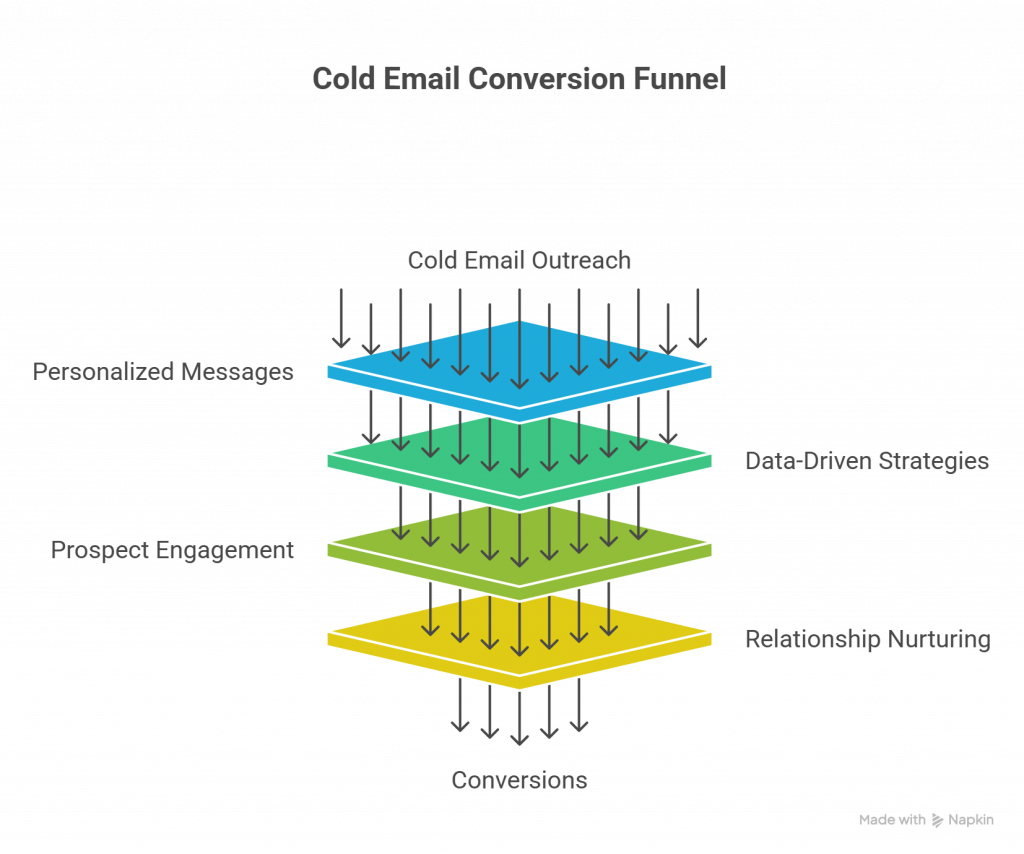
Start with trigger events that signal genuine need. Did their competitor just launch a new feature? Did they post a job opening that suggests a gap in their tech stack? These moments create natural conversation starters that feel relevant rather than random.
Your subject line needs to earn the open without resorting to clickbait. Specificity works better than curiosity. “Reducing API latency for fintech platforms” outperforms “Quick question” every single time. The subject line should clearly indicate what’s inside while speaking directly to a known pain point.
The body of your email should follow a simple structure: acknowledge their situation, introduce your understanding of their challenge, and offer one specific insight or resource. Notice what’s missing from that formula? Any mention of your product features, pricing, or company history. Those details come later, after you’ve established credibility.
The Technical Foundation That Supports Success
Before worrying about copy or targeting, you need the infrastructure right. Email deliverability determines whether prospects ever see your carefully crafted messages. One spam complaint or poor sender reputation can tank an entire campaign.
Warm up new domains slowly. Start with small batches to legitimate prospects who are likely to engage. Gradually increase volume as your sender reputation improves. Most deliverability issues stem from teams that rush this process.
Authentication protocols matter more than ever. SPF, DKIM, and DMARC aren’t optional technical details. They’re the foundation that proves your legitimacy to email providers. Without proper authentication, even your best emails might never reach their destination.
Check out – Professional Email Lists
Monitor your metrics obsessively. A sudden drop in open rates often signals deliverability problems before your email provider flags any issues. Bounce rates above 5% suggest your data quality needs attention. These leading indicators help you course-correct before damage becomes permanent.
Building Sequences That Convert
Single emails rarely convert enterprise deals. The magic happens in thoughtful follow-up sequences that add value with each touchpoint. But here’s where most teams stumble: they create sequences that feel like nagging rather than nurturing.
Your second email shouldn’t reference the first if you received no response. Assume they never saw it and try a completely different angle. Maybe your first email focused on efficiency gains. Your second could address risk mitigation. Different problems resonate at different times.
Vary your content types throughout the sequence. Send a case study after an initial value proposition. Share a relevant industry report before asking for a meeting. Each email should stand alone as valuable, even if the prospect takes no action.
Know when to stop. Seven-touch sequences work for some products and audiences. Others see diminishing returns after three emails. Test your own drop-off points and respect when prospects clearly aren’t interested. Persistence should never cross into annoyance.
Targeting: The Multiplier Effect
Perfect execution of a cold email means nothing if you’re reaching the wrong people. Modern tech sales require surgical precision in targeting. Broad campaigns waste everyone’s time and damage your sender’s reputation.
Start with your ideal customer profile based on actual data, not assumptions. Which customers generate the highest lifetime value? Which closes fastest? Which expands most aggressively? Build your targeting criteria around these patterns rather than generic demographic filters.
Look beyond job titles to identify actual buying authority. A Director of Engineering at a 50-person startup makes technology decisions. The same title at a Fortune 500 company might have limited influence. Company size, org structure, and funding stage all impact who actually holds buying power.
Account-based approaches amplify cold email effectiveness. When you coordinate outreach across multiple decision-makers at target accounts, you create the air cover that moves deals forward. Just ensure your messaging acknowledges other conversations happening within their organization.
Testing Your Way to Better Results
Treating cold email as a fixed process rather than an ongoing experiment leaves money on the table. Every element of your outreach deserves systematic testing. Small improvements compound into significant pipeline growth over time.
Test one variable at a time. Changing your subject line, sender name, and call-to-action simultaneously makes it impossible to identify what drove results. Isolate each element and give tests enough volume to reach statistical significance.
Don’t just test tactics. Test strategic positioning. Does leading with ROI outperform leading with risk reduction? Do technical details resonate more than business outcomes? These higher-level tests often yield breakthrough insights that tactical tweaks never uncover.
Document everything. Your testing from six months ago provides clues about seasonal trends and audience evolution. When performance dips, historical data helps you separate temporary fluctuations from fundamental shifts requiring strategy changes.
Common Mistakes That Kill Campaigns
Even experienced teams fall into traps that torpedo otherwise solid campaigns. The most common? Optimizing for vanity metrics instead of actual business outcomes. High open rates mean nothing if replies don’t convert to meetings and deals.
Another frequent mistake: sending emails that sound like they came from a marketing department. Decision-makers can smell corporate-speak from miles away. Write like you’re emailing a colleague, not delivering a press release. Conversational beats are polished every time.
Many teams also give up too quickly. Building cold email momentum takes time. Your first campaign rarely performs as well as your tenth. Each iteration teaches you something about your audience, your messaging, and your market.
Integration With Your Broader Sales Strategy
Cold email shouldn’t exist in isolation. The most successful tech sales teams weave email into a multi-channel approach that reinforces messages across touchpoints. An email mentioning a piece of content you shared on LinkedIn carries more weight than either tactic alone.
Coordinate timing between channels. After connecting on LinkedIn, wait two days before sending an email that references the connection. After a prospect visits your pricing page, trigger a relevant email within hours. These coordinated touches feel helpful rather than overwhelming when executed thoughtfully.
Use cold email to set up other channels. An initial email might share valuable research with no ask beyond “would you find quarterly updates on this topic useful?” Those who say yes become warmer leads for future outreach via phone or direct mail.
The Future of Cold Email in Tech Sales
Artificial intelligence will continue reshaping cold email, but not in the ways most people assume. AI won’t replace the need for strategy, research, and genuine insight. Instead, it will handle the repetitive tasks that bog down sales teams today.
Expect better personalization at scale. Tools that truly understand a prospect’s context will craft relevant opening lines faster than humans can research them manually. But the strategic decisions about positioning, timing, and targeting will remain firmly in human hands.
Deliverability will become more challenging as email providers deploy sophisticated AI to identify mass outreach. This creates a growing advantage for teams that invest in quality over quantity. The gap between sophisticated operators and spray-and-pray tactics will widen considerably.
Making Cold Email Work for Your Team
Success starts with mindset. Stop viewing cold email as a necessary evil and start treating it as a craft worth mastering. The sales professionals who invest time studying what works, testing new approaches, and refining their skills will consistently outperform those who treat it as an automated afterthought.
Allocate real resources to cold email infrastructure. Budget for proper tools, data sources, and training. Half-hearted efforts produce half-hearted results. The teams seeing double-digit response rates didn’t stumble into success. They built systems designed to deliver results.
Most importantly, focus on providing value rather than extracting it. Every email should leave the recipient slightly better off for having read it, regardless of whether they become a customer. This mentality shift transforms cold email from an interruption into a contribution.
Cold email isn’t dead. Lazy cold email is dead. Generic cold email is dead. Spammy cold email is dead. But strategic, personalized, value-driven outreach? That’s more alive than ever. The question isn’t whether cold email works. The question is whether you’re willing to do it right.
Frequently Asked Questions
Yes, cold emailing remains one of the most effective strategies for tech sales teams in 2026. With proper personalization, targeting, and automation tools, cold emails can generate high-quality leads, nurture prospects, and drive conversions. Modern sales teams leverage data-driven insights to ensure emails are relevant, increasing open and response rates.
Tech sales teams can improve cold email response rates by focusing on personalization, concise messaging, and clear calls-to-action. Using AI tools for research, segmenting audiences, and incorporating value-driven content tailored to the recipient’s pain points significantly boosts engagement. Timing and follow-up sequences are also critical factors for success.
The difference lies in relevance and personalization. Modern cold emails are research-backed, targeted, and offer clear value to the recipient, whereas spam is generic and unsolicited. Using AI-driven personalization and behavioral data ensures cold emails resonate with decision-makers, establishing credibility and trust in the tech sales process.
Absolutely. Cold email works best when integrated with multi-channel outreach, such as LinkedIn messaging, content marketing, and account-based marketing (ABM). Combining channels allows tech sales teams to stay top-of-mind with prospects, reinforce messaging, and increase overall conversion rates without relying solely on one method.
Common mistakes include sending generic messages, neglecting follow-ups, ignoring personalization, and failing to provide clear value. Overly long emails, poor subject lines, or irrelevant offers reduce engagement. Modern sales teams succeed by testing email strategies, leveraging analytics, and continuously refining messaging for higher deliverability and response rates.