The Future of ERP: Key Trends Impacting SAP and NetSuite Users in 2026


Let’s be honest – ERP systems are going through their biggest shake-up in years. If you’re running SAP or NetSuite, you’ve probably noticed that your system is doing a lot more than just tracking invoices and inventory these days.
What used to be glorified accounting software is turning into something that actually helps you make smarter business decisions.
Here’s the thing: if you’re a finance lead, supply chain manager, or IT director, you’re probably wondering how to keep up with all these new features without breaking what already works.
The reality is that companies figuring this out now are going to have a real edge—better efficiency, faster operations, sharper insights. The ones waiting? They’re going to be playing catch-up while their competitors are already three steps ahead.
AI Is Finally Doing the Heavy Lifting
Remember when AI in ERP was more hype than help? Those days are over. Both SAP and NetSuite are baking AI right into the core of their platforms, and it’s actually making a difference in how we handle tedious tasks.
SAP’s Business AI is taking care of invoice processing, month-end close, and procurement workflows with way less hand-holding than before. It learns from what you’ve done in the past to spot weird patterns, suggest smarter purchasing moves, and even give you a heads-up about cash flow issues before they bite you.
NetSuite’s doing similar things with SuiteAnalytics and machine learning, especially when it comes to predicting demand and optimising inventory.
What’s changed in 2026? These AI features actually work well now. Early versions needed tons of data to train and still gave you hit-or-miss results. Today’s models are pretty accurate right out of the gate and get better the more you use them.
Finance teams that used to spend weeks closing the books are doing it in days. Procurement folks are cutting manual PO processing by 70% or more.
The ROI is getting hard to argue with, but you still need to think it through. You’ll need clean data, clear processes, and realistic expectations about what AI can and can’t handle. It works best when it’s helping your people make better decisions, not trying to replace them.
Building Your ERP Like Lego Blocks
The old way of doing ERP—one massive system that does everything—is fading fast. Now, companies are building their tech stack more like Lego, piecing together the best tools for each job instead of forcing everything through a single vendor.
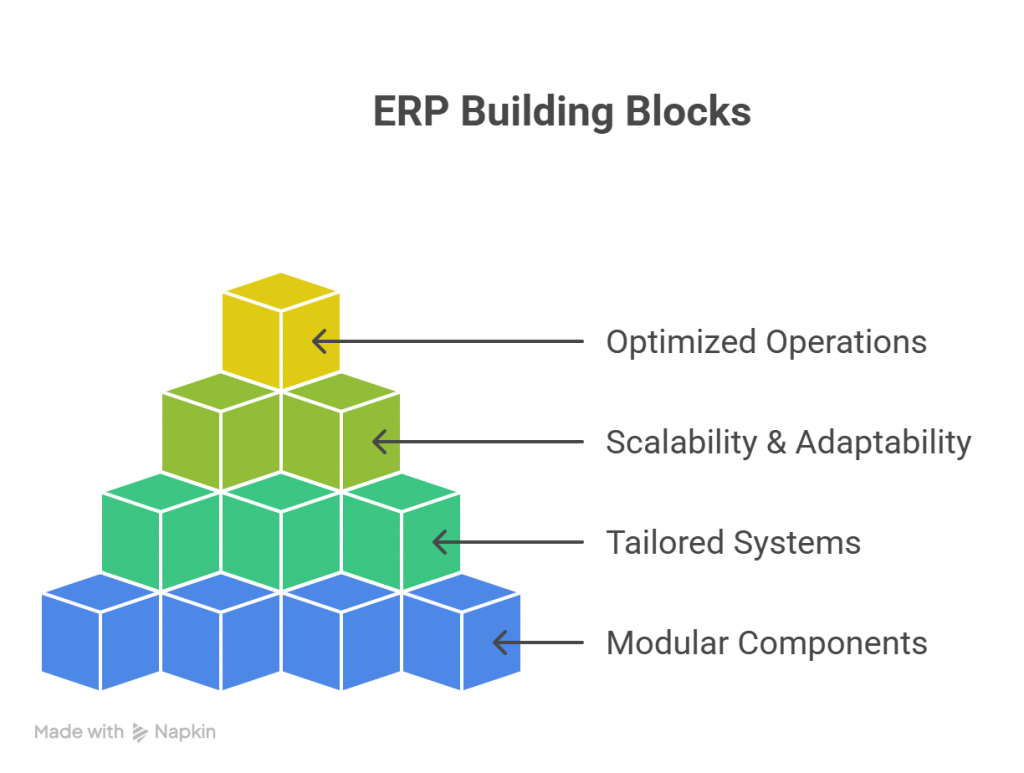
This makes sense when you think about it. Why bend your business processes to fit your ERP when you could build a tech stack that fits your business? SAP’s Business Technology Platform and NetSuite’s SuiteCloud both let you plug in specialised apps without messing up your core system.
A manufacturing company might use NetSuite for financials and orders while connecting purpose-built production planning software through APIs. A retailer could run SAP on the backend while using best-in-class POS and e-commerce platforms up front.
Everything talks to each other in real time, so you don’t end up with the data silos that used to drive everyone crazy.
This flexibility means less vendor lock-in and faster innovation. When something better comes along for a specific function, you can swap it in without ripping out your entire system.
The downside? More moving parts mean more complexity. You’ll need solid integration governance and API management as your tech ecosystem grows.
Real-Time Insights Are Now Table Stakes
Waiting until the month-end to understand how your business is doing? That’s not going to cut it anymore. Real-time analytics have gone from “nice to have” to “must have,” and both major platforms are responding with intelligence that shows up exactly when you need it.
NetSuite’s always had solid real-time dashboards, and they’re getting smarter with predictive models that spot trends before they’re obvious.
SAP Analytics Cloud is bringing similar capabilities to SAP users, with the bonus of tapping into massive amounts of historical data from implementations worldwide.
The practical impact shows up every day. Sales leaders can spot pipeline problems right now instead of finding out weeks later in quarterly reviews. Supply chain managers get alerts about potential stockouts days ahead of time, complete with suggested fixes.
CFOs can run different scenarios instantly to see how market shifts might hit the bottom line.
What’s really different now is that these systems don’t just tell you what’s happening or what might happen—they suggest what to do about it and predict how different choices might play out. The tech handles the number crunching while you focus on the judgment calls.
The Cloud Conversation Has Moved On
Most companies aren’t asking “if” they should move to the cloud anymore—they’re asking “when.” Cloud capabilities are advancing so fast that on-premise systems are falling further behind every quarter.
NetSuite’s always been cloud-first, and it keeps rolling out innovations that just aren’t possible when you’re running servers in your basement. Automatic updates mean everyone gets the latest features without those painful upgrade projects.
Elastic scalability means your system handles peak loads without you buying expensive infrastructure you’ll only use twice a year.
SAP users have a trickier path. The RISE with SAP program is trying to make cloud migration easier, but a lot of companies are still running heavily customised on-premise setups with years of technical baggage. For these folks, 2026 is a decision point.
Staying on-premise means accepting that the gap between what you can do and what cloud competitors can do keeps getting wider. Migrating takes real investment and change management, but putting it off just makes the eventual move harder.
The financial picture goes beyond subscription costs. Cloud deployments usually reduce the total cost of ownership by eliminating infrastructure management, simplifying disaster recovery, and cutting the IT resources you need for keeping things running.
You can redirect those savings to stuff that actually differentiates your business instead of just keeping the lights on.
Industry-Specific Solutions That Actually Fit
Generic ERP implementations that need endless customisation are giving way to industry-specific solutions that work well right out of the box.
Both SAP and NetSuite now offer versions tailored to specific industries, with built-in processes, workflows, and reporting designed for your particular world.
NetSuite’s SuiteSuccess gives you pre-configured implementations for industries from wholesale distribution to software companies. SAP’s industry cloud solutions do the same for manufacturing, retail, and professional services.
A pharma company implementing NetSuite gets lot tracking, expiration date management, and regulatory compliance features without custom development.
A discrete manufacturer using SAP gets production planning capabilities tuned specifically for how they operate. These industry features used to require expensive consulting projects and custom code that made upgrades a nightmare.
The advantage isn’t just faster implementation. Industry-specific solutions incorporate best practices from thousands of similar companies, helping you avoid common mistakes and adopt processes that actually work. The trick is knowing when to take the standard approach and when your business genuinely needs something custom.
The best implementations balance out-of-the-box functionality with the processes that give you a competitive edge.
ERPs That Don’t Make You Want to Scream
ERP systems earned their reputation for terrible interfaces and brutal learning curves, but that’s changing fast. Modern UX design is making these systems way more intuitive, and low-code tools are letting more people customise them.
Both platforms are investing heavily in interfaces that work like consumer apps instead of enterprise software from 2005. Role-based dashboards show you what matters without making you dig through endless menus. Mobile apps give you full functionality for approvals, lookups, and data entry from wherever you are.
Maybe more importantly, low-code customisation tools are letting business users modify workflows, create reports, and build simple apps without writing actual code.
A finance manager can design a new approval workflow using visual tools instead of submitting an IT ticket and waiting weeks for development resources.
This democratisation cuts IT bottlenecks and speeds up innovation, but it also introduces new risks. You need governance that balances empowerment with control.
Without proper oversight, well-meaning business users can create data quality issues, security holes, or workflows that skip necessary checks. The goal is to enable creativity within guardrails that protect system integrity and compliance.
Sustainability Reporting Gets Built In
ESG reporting is shifting from voluntary feel-good stuff to mandatory disclosure for a lot of companies. ERP systems are responding by building sustainability tracking right into core business processes.
SAP’s Sustainability Control Tower and NetSuite’s sustainability management features now track carbon emissions, waste, energy consumption, and other ESG metrics alongside your regular financial data. The integration means sustainability performance gets measured with the same rigour as revenue and profit.
For supply chain managers, this creates new visibility into the environmental impact of sourcing decisions. Procurement teams can evaluate suppliers on sustainability credentials in addition to price and quality. CFOs can produce regulatory-compliant ESG reports without manually collecting data across a dozen different systems.
The regulatory environment is creating urgency. The EU’s Corporate Sustainability Reporting Directive, similar regulations elsewhere, and investor pressure for ESG transparency are making sustainability reporting as routine as financial reporting. Companies that build these capabilities into their ERP now will have big advantages over those scrambling to collect data manually when deadlines hit.
Security for a World That Works from Anywhere
Remote and hybrid work has completely changed ERP security requirements. Systems that used to sit safely behind corporate firewalls now need to serve users accessing them from home networks, coffee shops, and client sites around the world.
Both SAP and NetSuite are implementing zero-trust security models that verify every access request, no matter where it’s coming from. Multi-factor authentication is becoming standard instead of optional. Advanced threat detection uses AI to spot unusual patterns that might mean compromised credentials or someone up to no good.
Compliance automation is equally critical. If you’re subject to SOX requirements, GDPR privacy rules, or industry-specific regulations, you can’t rely on manual processes to ensure compliance across complex, distributed operations.
Modern ERP systems build compliance controls right into workflows, automatically documenting who did what and when for audit purposes.
The challenge for IT leaders is balancing security with usability. Too much security frustrates users and tanks productivity. Too little security exposes you to breaches that could be devastating.
The best approaches use intelligent, risk-based security that applies stronger controls where risks are highest while keeping everyday tasks frictionless.
Figure Out Your Next Move
These ERP trends shaping 2026 create both opportunities and headaches for companies running SAP and NetSuite. The key is being strategic instead of just reacting to whatever lands in your inbox.
Start by figuring out which trends hit your business hardest. Struggling with the month-end close? Prioritise AI-powered automation. Facing new ESG reporting requirements? Focus on sustainability tracking. Growing fast? You probably need the scalability that cloud migration provides.
Have real conversations with your ERP vendor about roadmaps and timelines. Understand what’s available now, what’s coming in the next release, and what requires extra investment or third-party solutions. Ask specific questions about implementation complexity, data requirements, and expected ROI.
Don’t try to do everything at once. Successful ERP evolution happens through a series of smart steps, not one massive transformation.
Prioritise changes that deliver clear business value and build momentum for bigger initiatives.
The companies that will do well in 2026 and beyond are those that see their ERP as a strategic platform for innovation, not just a system for recording financial transactions. The technology is ready to support that vision. The question is whether you’re ready to embrace it.
SAP is an enterprise-grade ERP solution designed for large organizations with complex, multi-national operations, offering deep customization and industry-specific functionality. NetSuite is a cloud-native ERP platform better suited for small to mid-sized businesses, providing faster implementation, lower upfront costs, and integrated financial management with CRM capabilities. SAP typically requires significant IT infrastructure and resources, while NetSuite operates entirely in the cloud with subscription-based pricing.
AI is transforming ERP systems through intelligent automation, predictive analytics, and natural language processing. Modern ERP platforms now offer AI-powered demand forecasting, automated invoice processing, intelligent cash flow predictions, and conversational interfaces for data queries. Machine learning algorithms optimize inventory levels, detect anomalies in financial transactions, and provide proactive insights for decision-making, reducing manual data entry and improving operational efficiency across finance, supply chain, and HR functions.